
 By XReporter
 Inside numismatics, the condition of a paper bill acts as the main factor directly controlling its final selling cost.
For a majority of modern bills, those printed in large numbers, the only thing able to make the cost rise above the face value is the bill’s perfect state.
Collectors willingly spend huge amounts of money on bills that are brand new and faultless, while the same bill, having moved through regular use and showing even small problems, remains only a normal tool for payment.
Judging a 20 Dollar bill condition stands as a difficult process, asking for close attention to small details and needing the use of a shared grading scale.
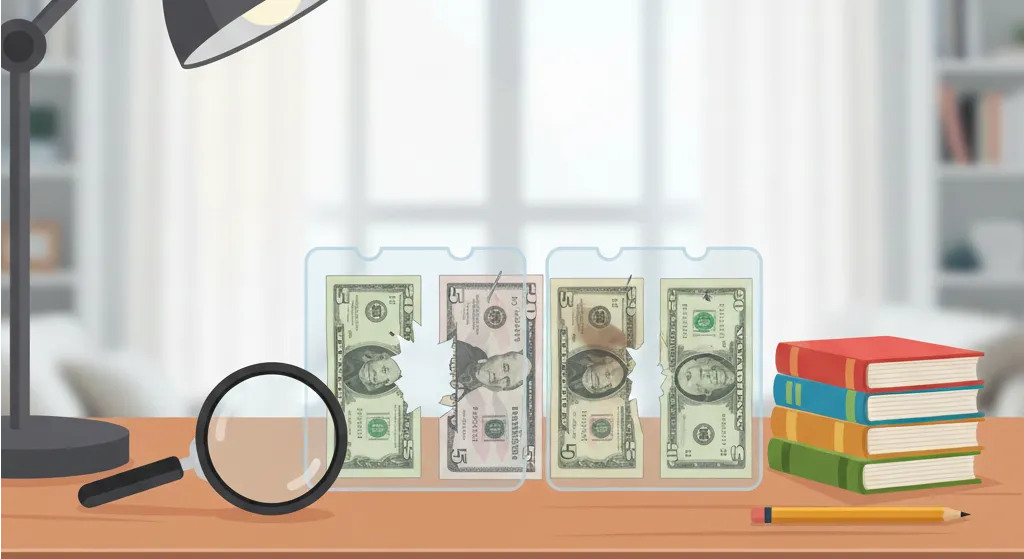
Judging the state of paper bills uses the 70-point Sheldon scale, a system changed to fit paper money.
That scale helps decide the level of wear precisely and gives the bill a matching number code.
The higher the score, the better the condition is, and following that, the higher the collecting cost becomes.
The starting letter names used in collecting give a general idea of how well the bill has been kept.
- UNC (Uncirculated): The bill never went into use, being totally new, showing zero signs of use. It needs to be clean, having the paper’s original shine, and lacking folds, creases, or spots.
- AU (About Uncirculated): The bill is almost new, possibly having been in use for a short time or showing only the smallest problems, for example, just one light fold across the middle or a small mark from a counting machine. The state is extremely close to faultless.
- XF or EF (Extremely Fine): The bill shows a few light folds, usually no more than three, or small signs of light wear on the corners. It looks fresh from the outside, the paper keeping some of its first stiffness.
- VF (Very Fine): The bill spent time in use, showing clear signs of being handled, like many folds going up and down and side to side. The paper is no longer as stiff, but there are no tears or much dirt on the paper.
- F (Fine): The bill is worn down much, feeling soft, having many folds, possibly showing small tears along the edges, and some dirt. All parts of the printed picture are still clear enough to see.
- VG (Very Good): The bill is quite old and worn out. The paper is soft, feeling almost like cloth; the edges may be torn, possibly having big tears or missing small corner pieces.
- G (Good) and P (Poor): These are the lowest levels of keeping the bill in shape. The bill is badly damaged, possibly torn badly, stuck together with tape, covered in dirt, or having its color washed out.
Any fault appearing on the bill after its printing acts badly on its cost for collectors. To reach the top score, the bill needs to be free of all problems listed below.
- Crease: A problem running across the whole bill, being easy to see from both sides. Just one crease removes the bill from the UNC status.
- Wink: A small, light fold that does not go across the entire bill and does not break the paper fibers. It does not lower the score as much as a crease, but it is not allowed in the UNC group.
- Tear: A part of the paper separating, most often found at the bill’s edges or near folded areas. Having a tear quickly lowers the bill’s collection cost.
- Pin Hole: A small, round hole, usually made by a stapler or a pin.
- Staple Mark: A long mark left by a metal staple, often followed by some paper fibers coming off.
- Spots: Marks from liquids, oil, ink, or other things. Spots can be light and hard to see, or deep and stuck onto the paper.
- Dirtiness: A general darkening or greasiness on the paper’s surface, coming from being touched often. The paper loses its first shine and clean look.
- Outside Writing: Any marks, signatures, stamps, or notes put on the bill by hand or machine.
- Bending Marks: Marks left by bank machines or counting machines that fold or wrap the bills into bundles.
The paper turns soft and weak, losing its first crispy sound, often because of water damage.
Unevenness, curves, or waves in the paper, caused by keeping the bill badly in wet conditions.
Tries to fix the bill’s whole shape using tape, glue, or other things. Any fixing quickly makes the bill worthless to a serious collector, and this consequence can be easily checked with a coin worth app.
The 70-point scale gives a high level of exactness in judging condition, particularly for the UNC group. Professional grading companies, like PMG (Paper Money Guaranty) and PCGS (Professional Coin Grading Service), use that system for setting a standard.
For a collector, it is helpful to know that a difference of just one point, like between UNC-67 and UNC-68, can mean a difference of hundreds or even thousands of dollars in the final cost.
| Score | Name | Effect on Cost (compared to UNC-60) |
| 70 | Gem Uncirculated (Perfect) | 200% and more |
| 67-69 | Superb Gem Uncirculated | 150% – 200% |
| 65-66 | Gem Uncirculated | 100% – 150% |
| 63-64 | Choice Uncirculated | 50% – 100% |
| 60 | Uncirculated (Base) | 100% (Base Cost) |
| 58 | Choice About Uncirculated | 20% – 40% |
| 40 | Extremely Fine | 10% – 20% |
| 10 | Very Good | 2% – 5% |
Professional grading companies often put special marks next to the score number, making the paper’s excellent quality stand out. These marks quickly make the bill’s cost higher.
- EPQ (Exceptional Paper Quality): Exceptional paper quality. This mark tells you the bill was not cleaned, pressed, or changed using chemicals. The paper keeps its first structure, color, and stiff feel. For modern bills, a high UNC score without the EPQ mark is usually seen as less valuable, suggesting possible hidden pressing.
- PPQ (Premium Paper Quality): Premium paper quality. This is like EPQ, used by some grading companies to show that the paper keeps its first look.
Getting the top score of UNC-70 happens seldom inside the coin identifier app free. The bill must be completely perfect in all its parts.
- The picture on the bill must sit exactly in the middle. The space from the bill’s edges to the picture must be the same on all four sides.
- A shift in the picture, known as Off-Center, is the usual reason for a score to drop from UNC. Even a small shift, like a 60/40 ratio (60% white edge on one side, 40% on the other), can move the score down to UNC-64 or less. Perfect centering means a 50/50 look.
- The new paper has a certain, slightly shiny look that soon goes away when used. Having that original shine is a must-have sign of UNC status.
- The paper must be totally stiff and make a “crispy” sound when touched gently. Losing stiffness shows the bill was near water, or someone tried to press it.
- Chemical Cleaning: Using chemicals to take away spots or dirt. That handling makes the paper softer and often leaves marks.
- Pressing: Making the bill flat using a strong weight to remove folds and creases. Pressing makes the bill look better, but experts can see the change in the paper’s feel. Bills that have gone through this kind of work cannot get the EPQ mark and have a lower worth.
A collector buying a bill for saving money or long-term keeping always tries to get the highest score possible.
Bills in VF condition and lower, if they are not old and rare in history, are harder to sell quickly.
Selling them for a cost higher than their face value is difficult because the market has so many examples like them.
The cost of a bill goes up in a fast way as its condition gets better.
The collector pays for the rarity of a perfect example, a thing that is almost impossible to find.
For bills printed after the year 1960, the standard for collectors is UNC-65 condition and higher. Bills having lower scores, not having special serial numbers or printing mistakes, are not seen as a good way to save money.
Wrong keeping is the second most common reason for a bill to lose its collecting cost after being used. Bills meant for collection need special places to stay.
- Keeping in PVC Albums: Materials having polyvinyl chloride (PVC) release acids over time, damaging the paper forever, causing it to turn yellow and sticky. The bill becomes unfit for grading.
- Touching with Hands: Oil and wetness from fingers leave marks on the bill, which turn dark over time. That leads to the score dropping because of surface dirt.
- Using Normal Envelopes: The paper used for normal envelopes or albums, is not acid-neutral, causing the bill’s color to change over time.
For keeping bills safe, special materials that are chemically safe should be used.
- Special hard plastic or clear holders that fully keep the bill away from the outside world.
- Mylar is a material that does not react with chemicals, making it safe for keeping bills for a long time.
- Using acid-free cardboard as a layer to stop physical damage during moving.
The perfect state for a bill means the bill is as close as possible to the moment it left the printing press, showing zero flaws put on it by people or the environment. Trying for UNC-70 means trying for total rarity, a thing that forms the high collecting cost.